
Neurodivergent Nurses and Sleep: Circadian Differences, Workplace Impact, and Structural Solutions
Many neurodivergent nurses experience sleep difficulties that substantially affect their wellbeing and clinical safety. Sleep dysregulation is a neurobiological reality that workplaces too often treat as a personal failing. Understanding why neurodivergent nurses sleep differently, and what structural changes make the difference, is essential for building safer, more inclusive healthcare teams.
Sleep and the Neurodivergent Circadian System
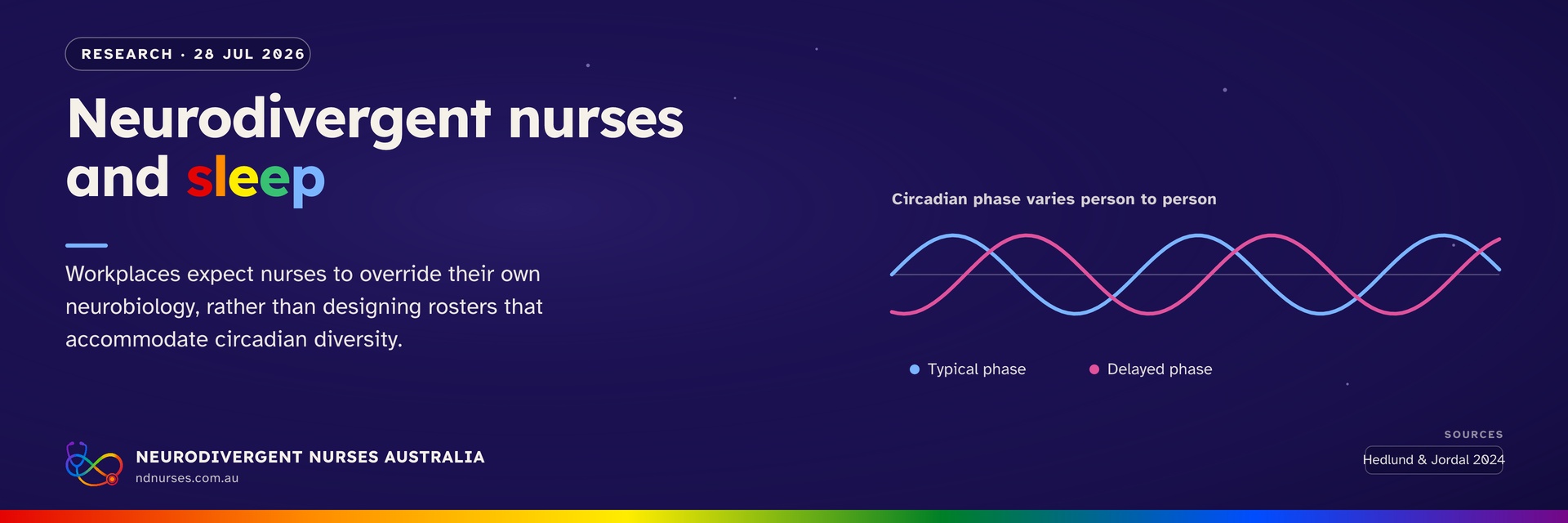
Neurodivergent nurses (particularly those with ADHD or autism) experience different sleep patterns and circadian rhythms than neurotypical peers. Research consistently identifies delayed sleep phase syndrome (arriving naturally awake and alert much later than typical schedules permit), variable sleep need, and difficulty with the “sleep pressure” that typically builds through a day. Delayed circadian rhythms are commonly reported among adults with ADHD, with similar patterns described in autistic individuals. They reflect how the neurodivergent brain regulates sleep and wakefulness, and they are not something a nurse chooses or could simply prefer away.
The consequence in nursing is predictable. Neurodivergent nurses assigned to early shifts fight their own circadian biology daily. Late shifts, ostensibly “better”, compress recovery time and collide with social obligations and family care, adding to the very adaptive labour that the brain already demands. Rotating rosters are particularly punishing: the constant reset prevents the neurodivergent circadian system from ever settling into synchrony, amplifying fatigue, mood dysregulation, and cognitive load. The burden of adaptation is structurally misplaced: the health service expects the nurse to override their neurobiology, when the schedules themselves could be designed to accommodate circadian diversity.
Workplace Accommodation and Systemic Change
Meaningful change requires two things working together. First, individual accommodations: flexible start and end times, minimised roster changes, protected sleep opportunity where feasible, and manager training to deprioritise “face time” in favour of actual clinical hours worked. These adjustments cost little and generate immediate wellbeing gains. Yet they remain rare, because managers often treat sleep difficulty as a personal coping problem, when it is a workplace design issue.
Second, systems change. Health services should audit rosters for neurodivergent inclusivity, asking whether they make sleep biologically sustainable as well as equitable. Research on fatigue in nursing consistently links understaffing and unsustainable rosters to burnout and error; neurodivergent nurses feel this acutely (Hedlund & Jordal, 2025). Supporting neurodivergent sleep is therefore a patient safety imperative.
Neurodivergent nurses bring particular strengths to clinical work: pattern recognition, hyperfocus on detail, lateral thinking during crisis. Chronic fatigue erases those strengths. When workplaces design schedules that account for neurodivergent sleep, they protect both individual wellbeing and team performance.
References
Hedlund, Å., & Jordal, M. (2025). What about neurodiversity among nurses? A cross-sectional exploration of work environment and health among nurses with ADHD and/or autism. WORK: A Journal of Prevention, Assessment & Rehabilitation, 80(3), 1287–1295. https://doi.org/10.1177/10519815241289852
Safe Work Australia. (2022). Model Code of Practice: Managing psychosocial hazards at work. Australian Government. https://www.safeworkaustralia.gov.au/
This post contains general information only and does not constitute legal, medical, or professional advice. Information is accurate to the best of the author’s knowledge at the time of publication. For advice specific to your situation, please consult an appropriately qualified professional.